
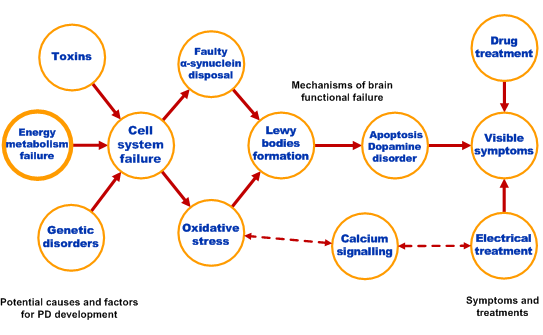
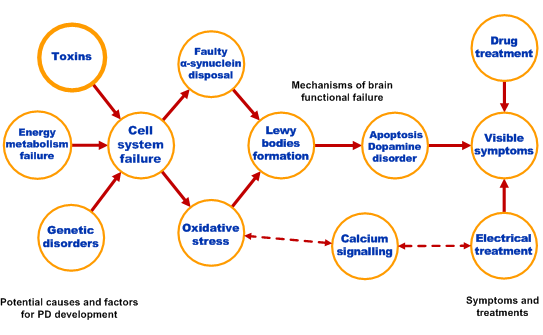
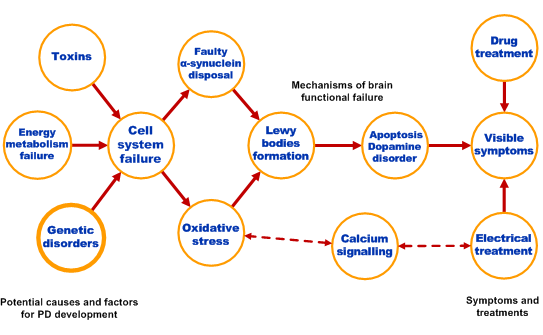
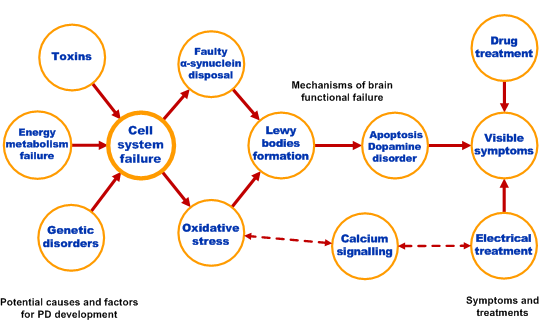
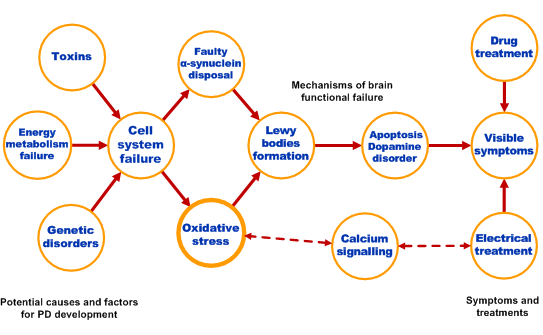
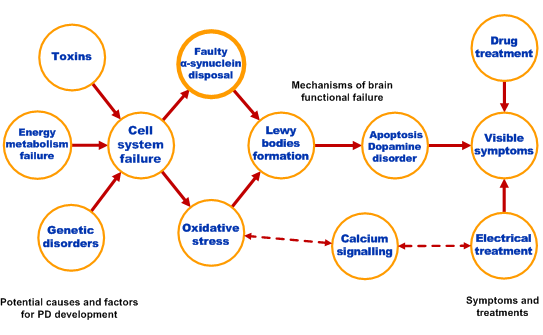
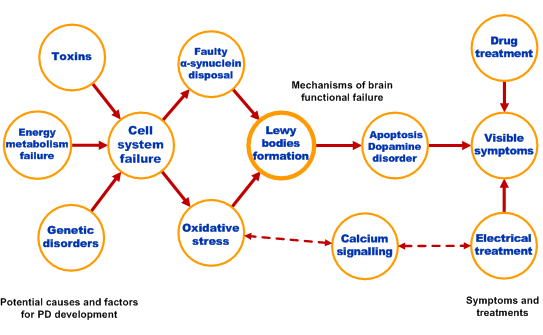
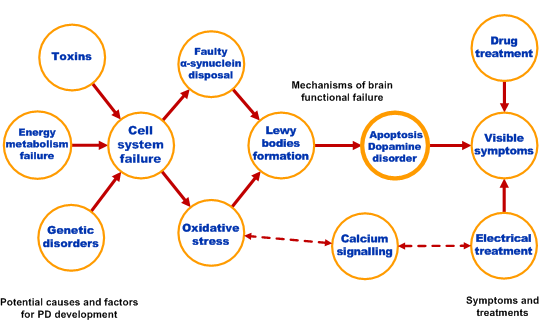
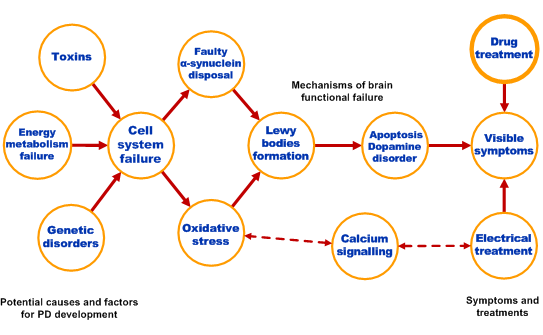
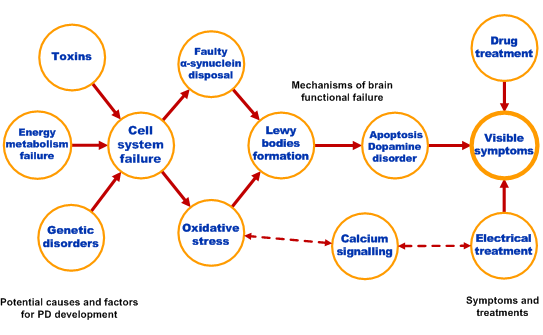

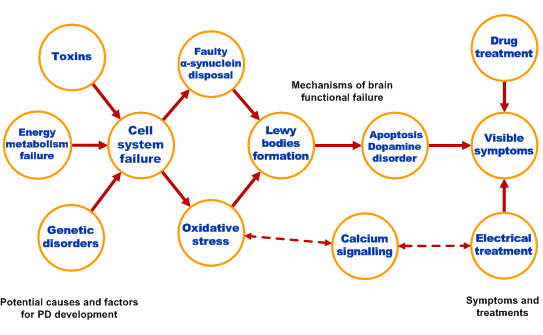
Diagram of the Systems of Parkinson's disease
(click in the designated areas for further information)
Oxidative Stress
Overview Oxidative stress occurs when excessive reactive oxygen products are produced more than the cellular mechanisms can absorb. This can occur by a number of mechanisms. For example, the MPTP based drugs that cause the end symptoms of PD (accumulation of Lewy bodies) are inducing significant oxidative stress and damage to α-synuclein in neurons. Elevated levels of iron have also been observed in the brains of Parkinson's sufferers and this in turn has been linked to increased oxidative stress and (potentially) the agglomeration of α-synuclein. Significant research addresses the use of iron chelators, thus preventing them from forming reactive oxidative products that may damaged proteins and cause oxidative stress. In a similar vein, excessive highly reactive molecules in the brain (free radicals) can cause cellular damage in part by oxidative stress. Links between dopamine metabolism and oxidative stress are also obvious, as dopamine can also cause oxidative stress if it is not correctly segregated by vesicles within the cellular environment. [Top] |
Research
[Top] |
Contact point
[Top] |
Selected References Qi Z., Miller G. W., Voit E. O. Computational Systems Analysis of Dopamine Metabolism. PLoS ONE, 3(6): e2444 (2008). doi:10.1371/journal.pone.0002444. [Top] |
